




Layout Solutions
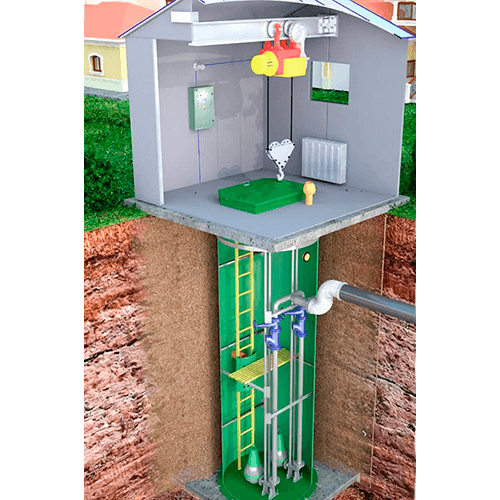
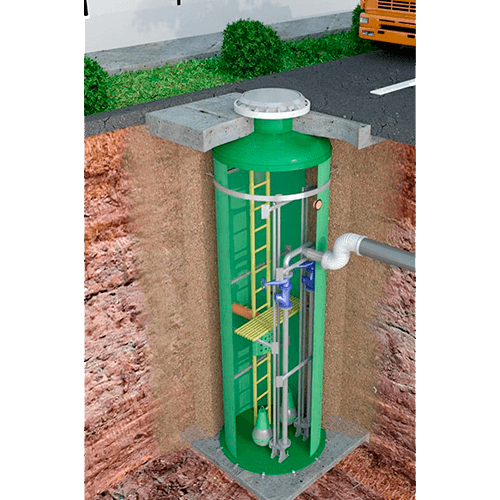
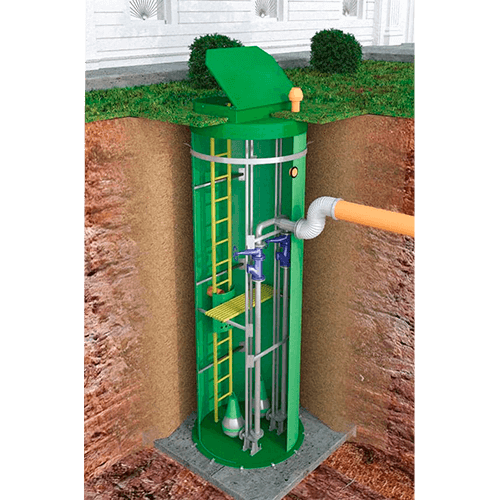
The structural basis of the station is formed by the following components:
- Inlet storage compartment
- Pumping equipment section
- Pipeline communications network
- Set of shut-off mechanisms
- Automated control system
- Supply and exhaust ventilation
Work cycle
The functional algorithm is implemented through a sequence of actions:
- Reception of incoming wastewater in the storage chamber
- Fill level monitoring with sensors
- Activation of pumping equipment when the threshold value is reached
- Transportation Discharge through a pressure manifold
- Pump shutdown when the level drops below a set limit
Advantageous characteristics
Advantageous featuresof standard pumping stations:
- Ready-made design solutions
- Accelerated documentation development time
- Cost-effectiveness
- Interchangeability of components
- Ease of installation and maintenance
Practical application
Target areasof use:
- Residential development
- Industrial areas
- Social facilities
- Utilities
- Drainage Systems
Technical Equipment
Main Equipment Arsenal:
- Centrifugal Pumping Units
- Automatic Control Systems
- Sensor Level Control Systems
- Protection Mechanisms
- Signaling Devices
Operating Regulations
Preventive Measures Include:
- Pump Park Performance Testing
- Tank Sanitation
- Automation Functionality Check
- Joint Tightness Monitoring
- Preventive Repairs
Technological Development
Current Design Trends:
- Use of Energy-Saving Technologies
- Installation of Remote Monitoring Systems
- Use of Materials with Increased Corrosion Resistance
- Improvement of Automated Systems
- Implementation of Modular Designs
Standard sewage pumping stations remain a popular solution in the wastewater sector due to their adaptability, reliability, and reasonable cost. Technological innovations are continuously improving their performance and ease of use.