




DRAINAGE Scheme: Application Areas
This operating principle is used in a variety of engineering systems, including:
- Sewage pumping stations (SPS);
- Wastewater treatment facilities;
- Storm sewer networks;
- Drainage sumps;
- Construction pits and other similar structures.
Control Features
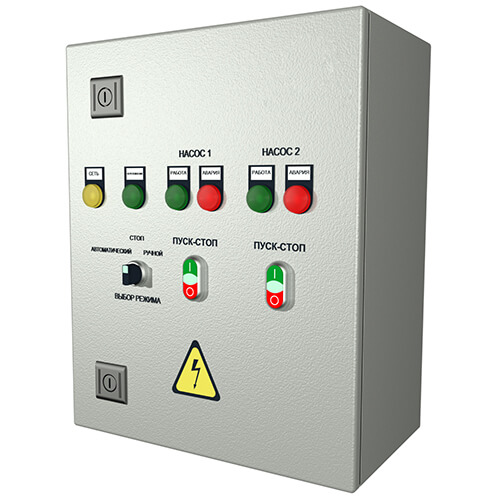
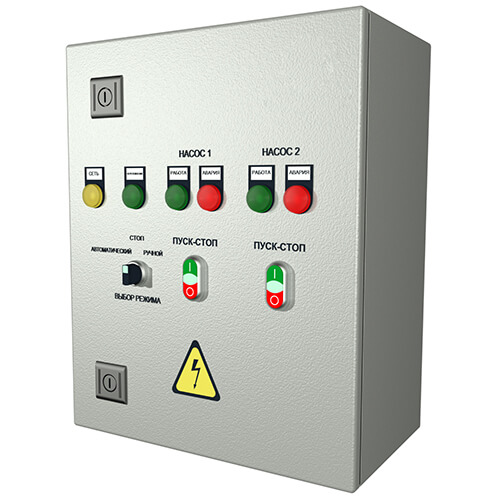
In manual mode, the operator controls the electric motors through controls located on the front panel of the cabinet. In automatic mode, commands are sent via external relay signals, which are generated depending on the current liquid level.
Automatic Mode Operation Algorithm
- If the liquid level remains below the mark recorded by float #1, the pumps do not turn on, regardless of the state of the other floats.
- When the level rises to float #2, one pump is started.
- If the level continues to rise and reaches the level of the float above, an additional pump is started.
- When the last float in the sequence is triggered, a test run of all pumps is performed. At this point:
- the "Overflow" indicator on the cabinet door lights up;
- the control system contacts switch.
- All operating pumps stop when the liquid level drops to float #1.