



Drainage and sewerage in the

Overview

Operating principle in "DRAINAGE" mode

The "DRAINAGE" mode is widely used in engineering systems for various purposes, including:

  • sewage pumping stations (SPS);
  • treatment plant complexes;
  • storm drainage systems;
  • drainage sumps;
  • construction pits and other similar objects.

Control methods

Control implementation is possible in two ways:

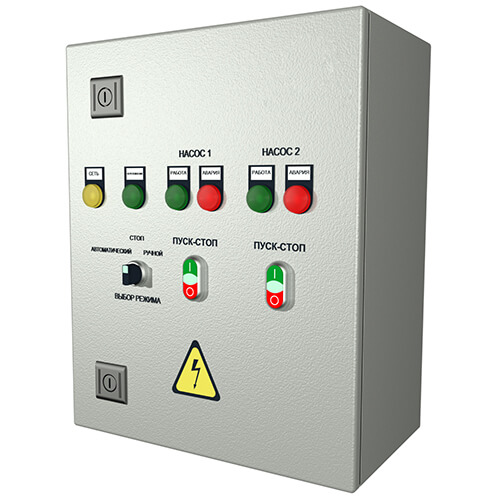
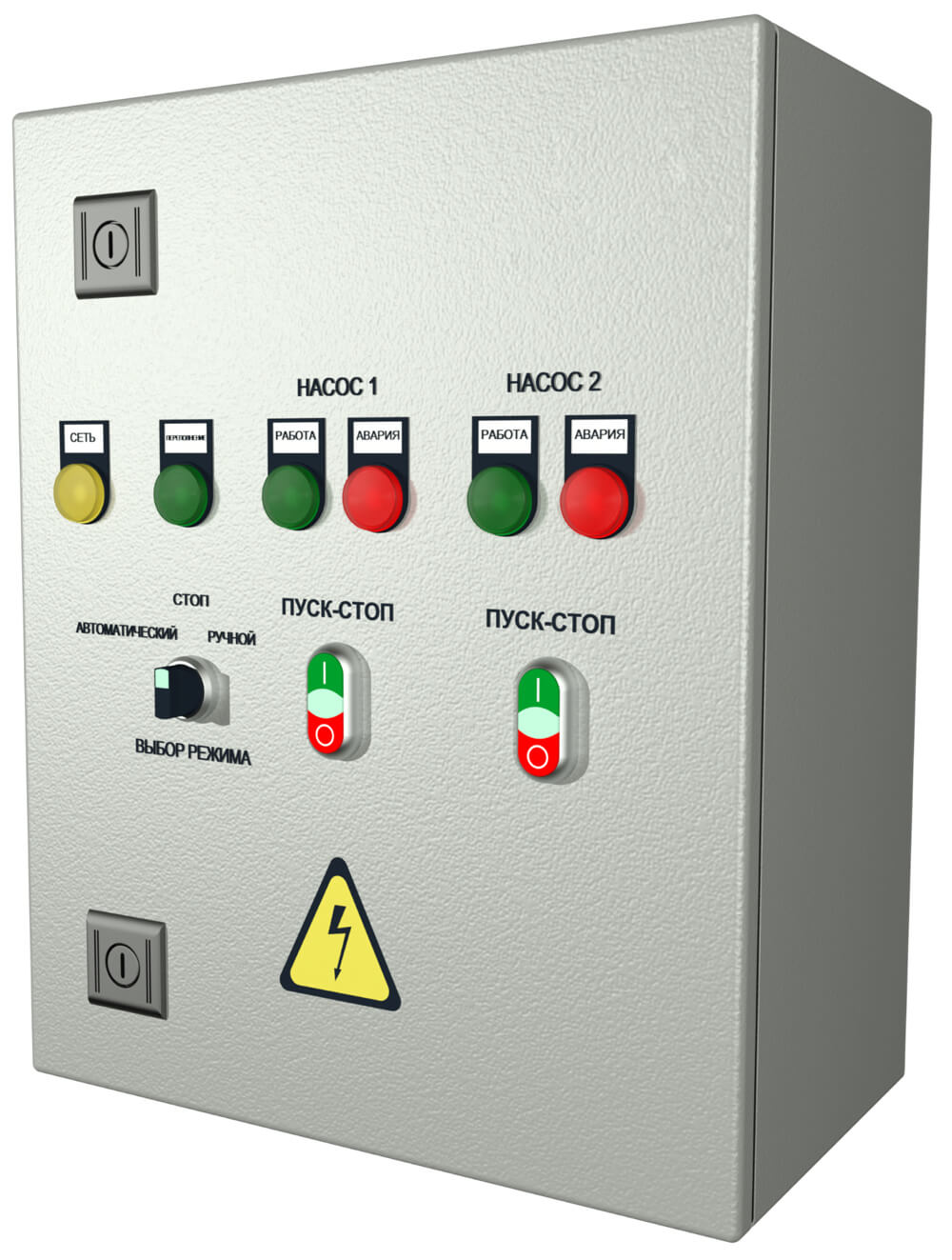
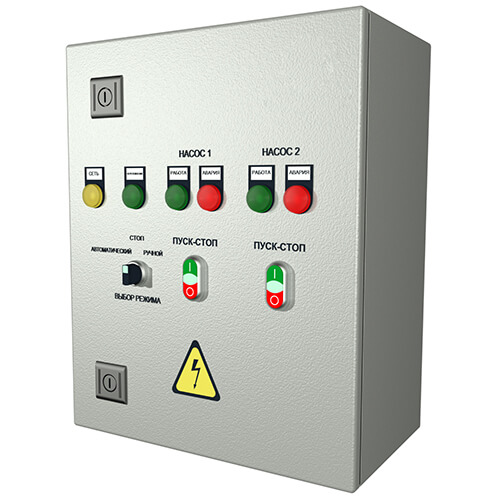
  1. Manual mode  The operator controls the electric motors using controls located on the front panel of the cabinet.

  2. Automatic Mode—commands are sent via external relay signals, which are generated based on liquid level data.

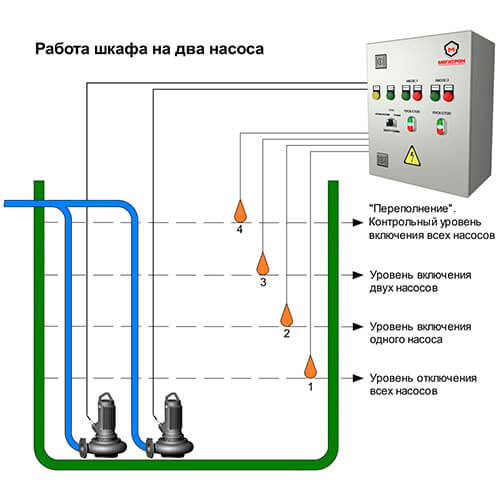
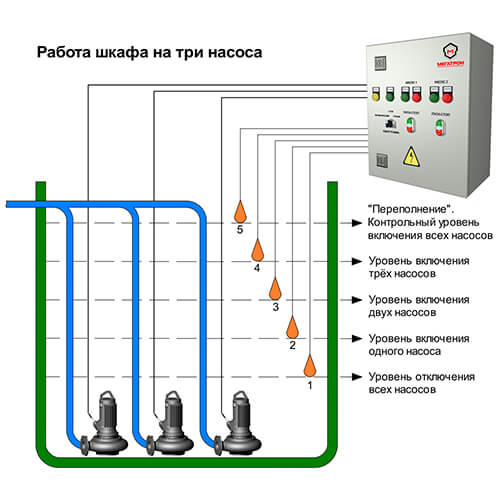
Automatic Control Algorithm

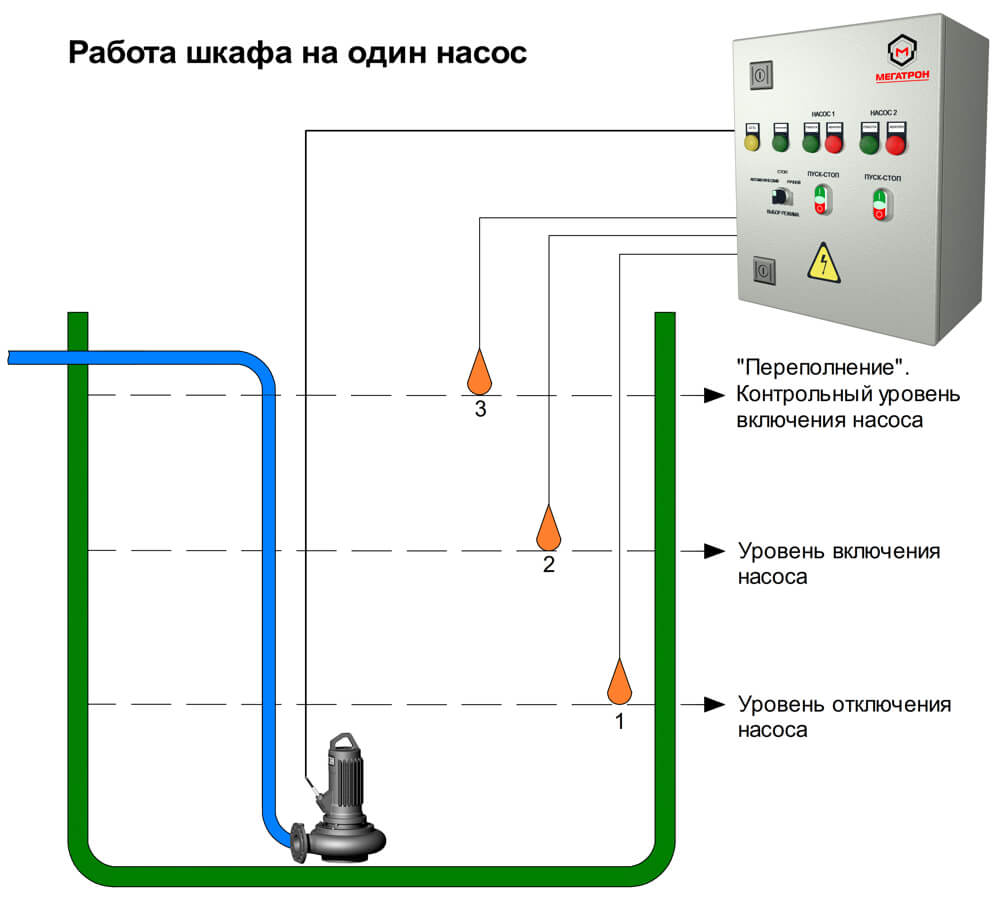
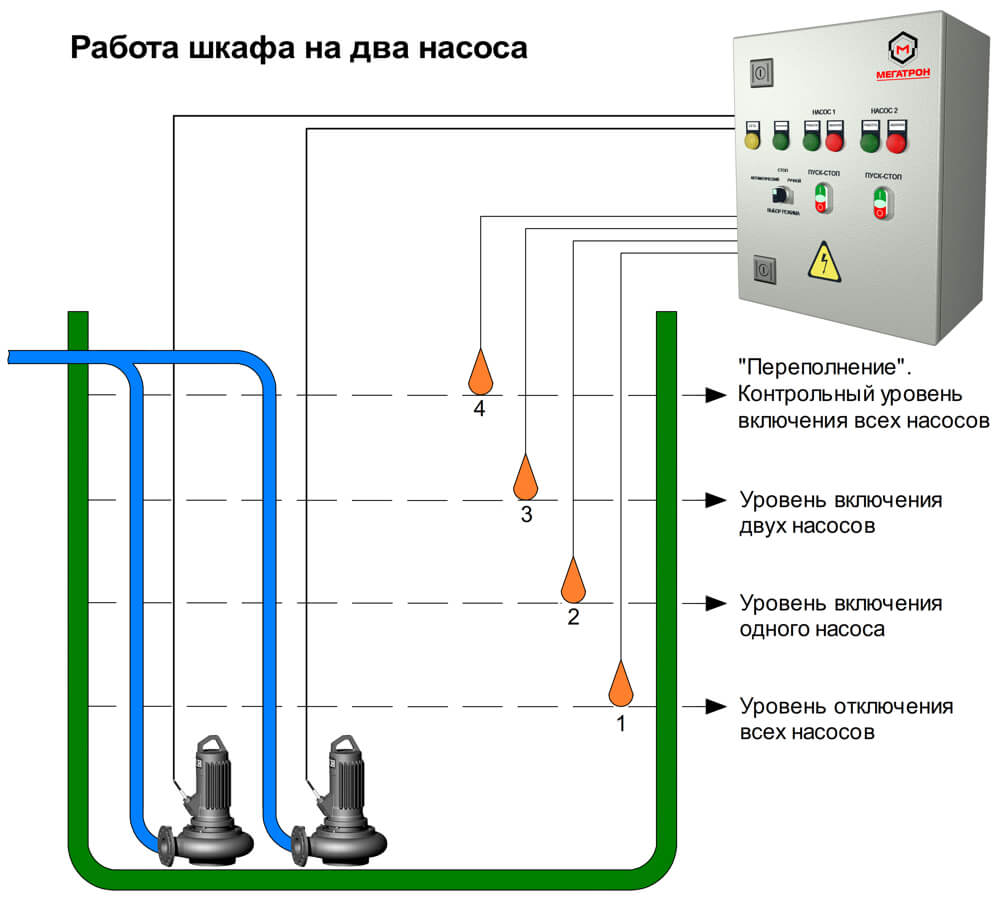
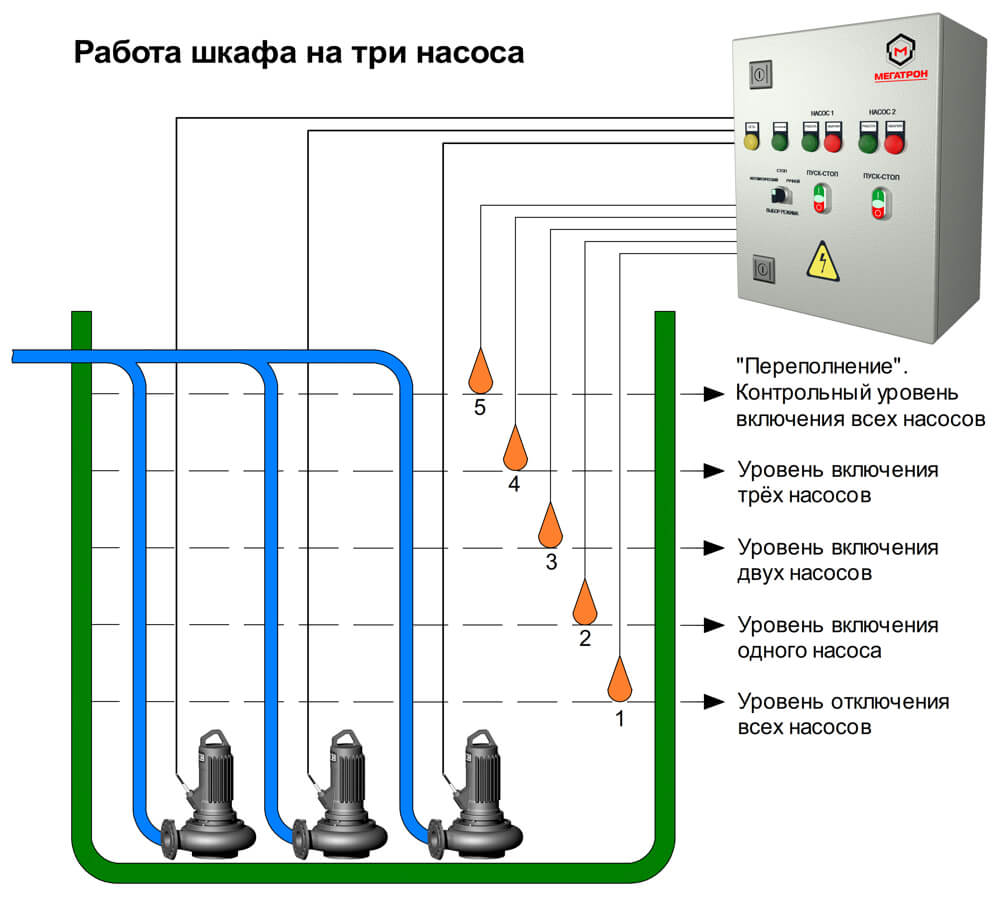
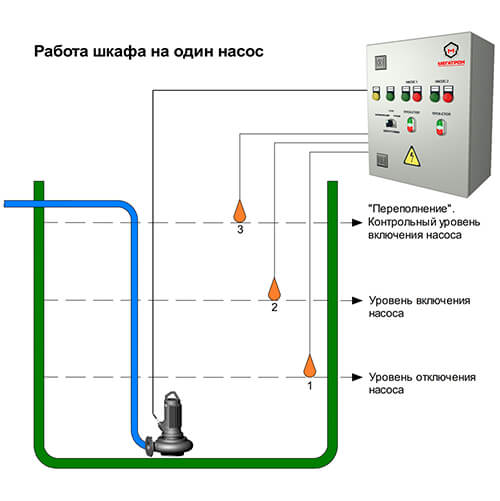
The system operates in automatic mode according to the following principle:

  1. Initial State
    When the liquid level is below the float #1 trigger point, the pumps remain off— regardless of the position of the other floats.

  2. Starting the first pump
    When the liquid level rises to float #2, one pump is activated.

  3. Sequential connection of additional pumps
    As the liquid level continues to rise and floats with higher numbers are activated, additional pumps are activated - one for each activated float.

  4. Overflow mode
    Activation of the last float in the numbering sequence initiates:

  • test start of all pumps;
  • activation of the Overflow indicator On the cabinet door;
  • Switching the control system contacts.
  1. Stopping pumps
    All operating pumps are switched off as soon as the liquid level drops to float level #1.

Additional Features

Control cabinets designed for operation with two or more pumps feature a flexible unit distribution function: the user can set the desired ratio of working and standby pumps.


Model overview

Those. information

Expanding the Control Cabinet Capabilities: Available Options

The basic cabinet configuration can be supplemented with a number of functional modules, allowing the equipment to be adapted to specific operating requirements.

1. Dispatch Modules

  • Motor operation monitoring is implemented via a changeover contact on the terminal block (option "Operation").
  • Cabinet operating mode monitoring is transmitted via a changeover contact on the terminal block.
  • Combined Level 1 Module Includes a changeover contact on the terminal block and a signal lamp on the cabinet door for visual monitoring.

2. Data Communication Interfaces

  • Modbus RTU—communication via the RS-485 interface.
  • Modbus TCP/IP—network integration via an Ethernet connection.

3. Additional Equipment for the Front Panel

  • Ammeter with Switch—current monitoring for one electric motor.
  • Voltmeter with Switch— Voltage monitoring at a single power input.
  • Hour meter—records the operating time for a single electric motor.

4. Climate modifications

  • UKHL1 version—operation in the temperature range from -60°C to +40°C outdoors.
  • UKHL2 version—operation at temperatures from -60°C to +40°C under cover (without direct exposure to precipitation or sunlight) or in an unheated room.

5. External Control Interfaces
  • Electrode connection—optional for drainage and sewage pump control cabinets.

6. Protective Modules

  • Voltage Monitoring—protects against overvoltage or undervoltage on one input.
  • Pt100/Pt1000 Temperature Sensor—monitors the temperature of one electric motor.
  • PTC Sensor—thermal protection for one electric motor.
  • Humidity Sensor—monitors the humidity level for one electric motor.

Download

Colors

DOP

More in this category:

Need a consultation?

We will tell you in detail about our services, types of work and typical projects, calculate the cost and prepare an individual offer!