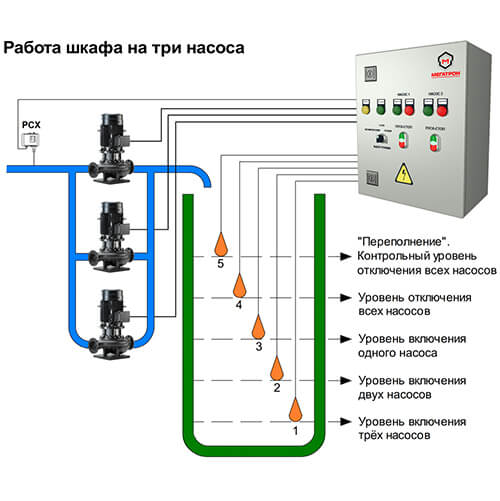
Overview
Operating Principle in "FILLING" Mode
The "FILLING" mode is used in a variety of process installations, including:
- I and II stage pumping stations;
- Storage tank filling systems;
- Borehole pump control systems and other similar solutions.
Control Options
The system supports two methods of electric motor control:
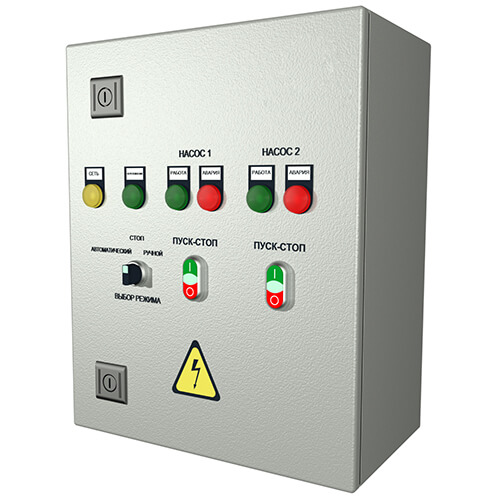
- Manual Mode—the operator controls the pump via controls located on the front panel of the cabinet.
- Automatic Mode— Operation is based on external relay signals that correlate with the current liquid level.
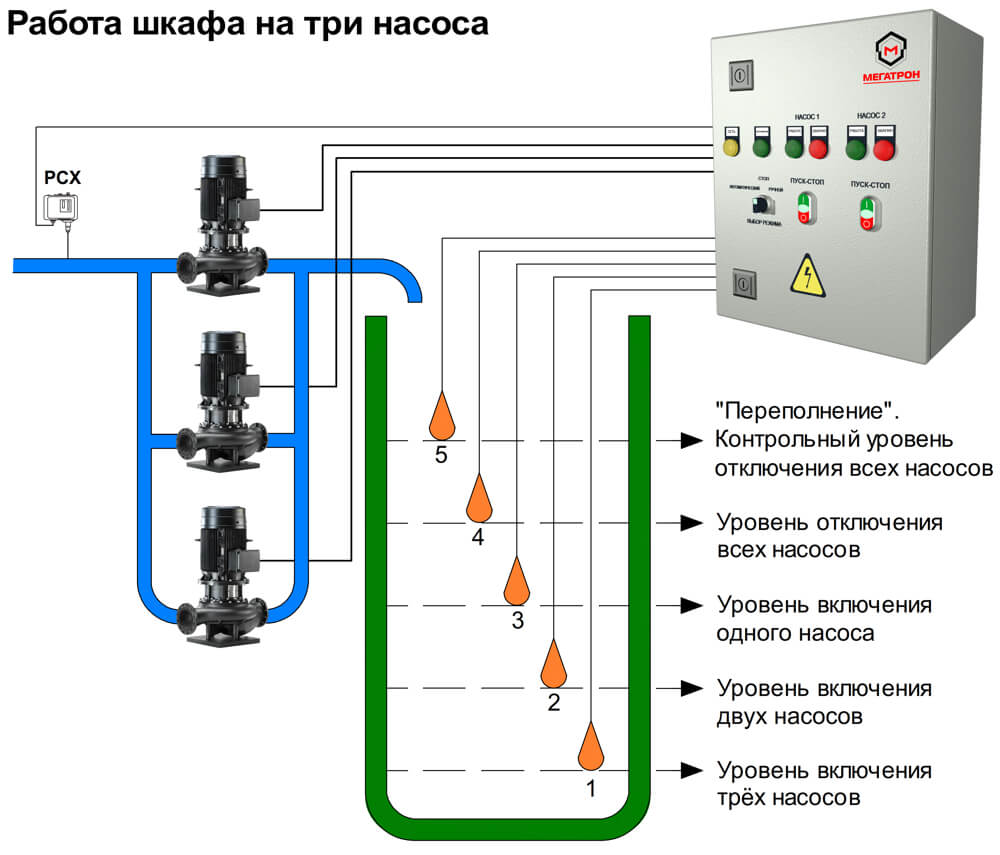
Automatic Operation Algorithm
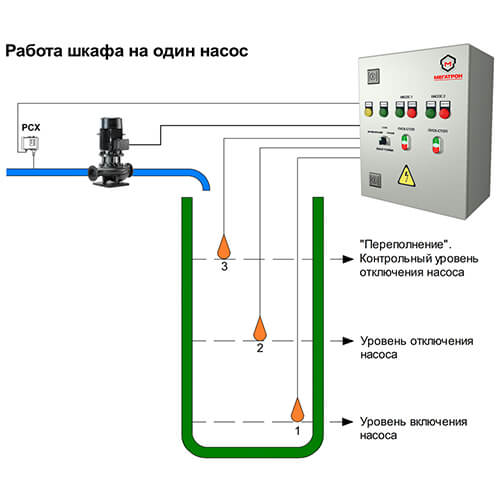
The system operates in automatic mode as follows:
- Initial State
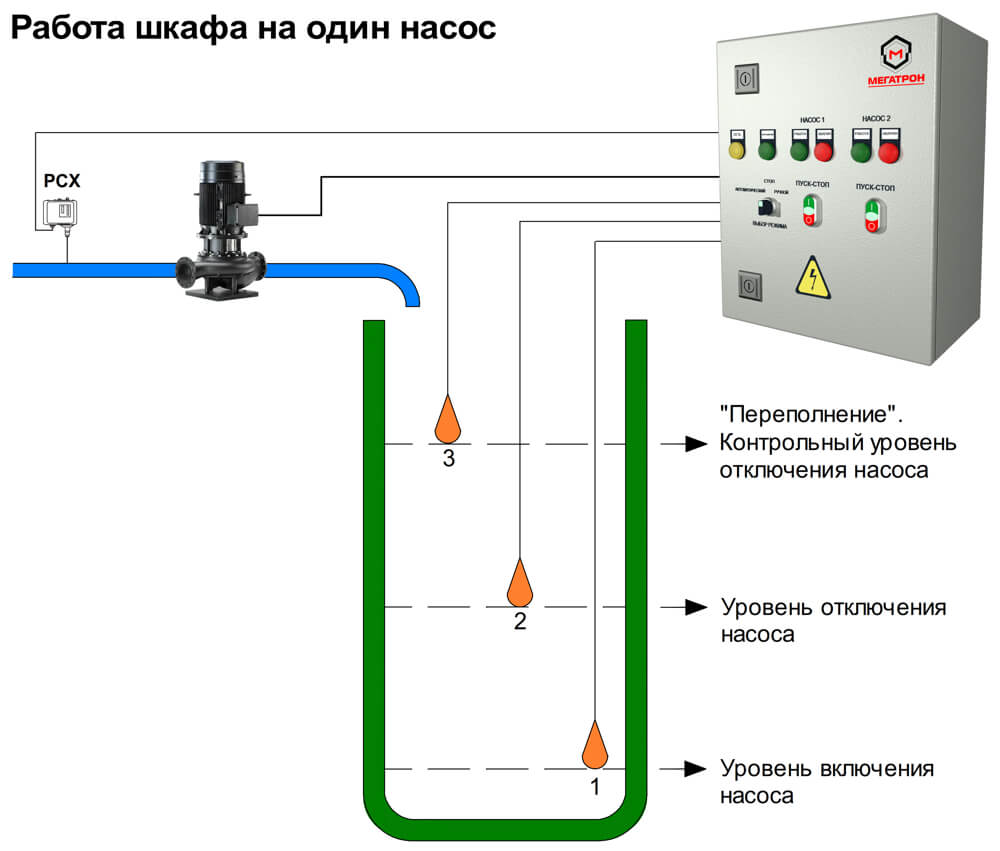
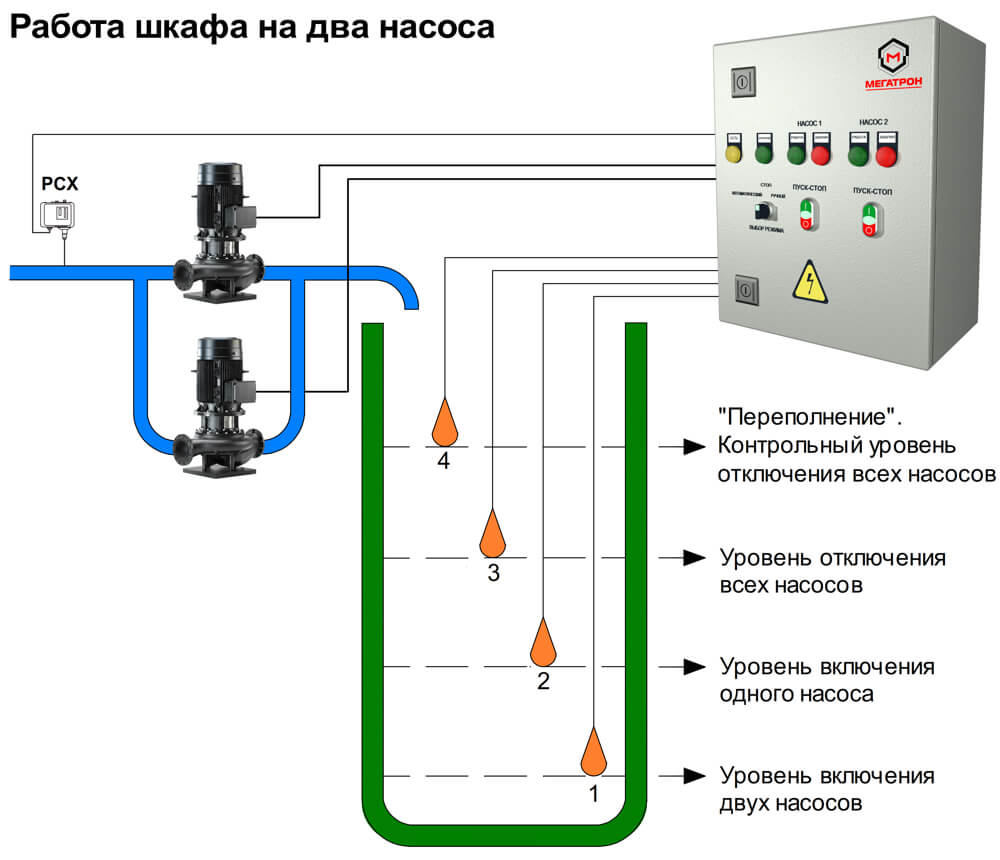
- If the liquid level exceeds the level of the second-to-last upper float, the pumps remain off — regardless of the position of the other floats.
- Starting the first pump
- When the liquid level drops to the level of the float below, one pump is turned on.
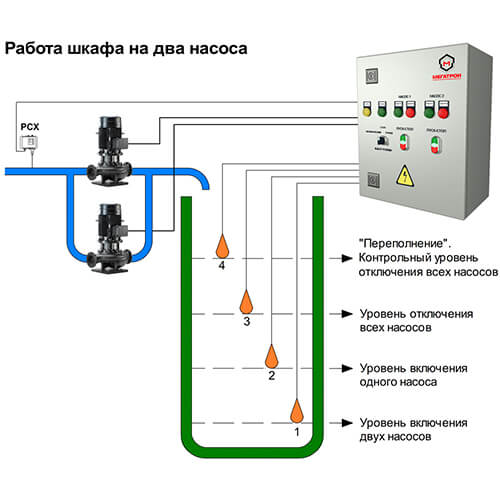
- Connecting additional pumps in series
- As the liquid level continues to drop, the system gradually starts additional pumps - Each time the next float is triggered.
- Maximum operating mode
- The triggering of float #1 initiates the simultaneous start of all operating pumps.
- Partial stop
- All operating pumps are switched off when the liquid level reaches the level of the second-to-last upper float.
- Emergency stop
When the last float in the numbered sequence is activated, the following occurs:
- forced stop of all pumps;
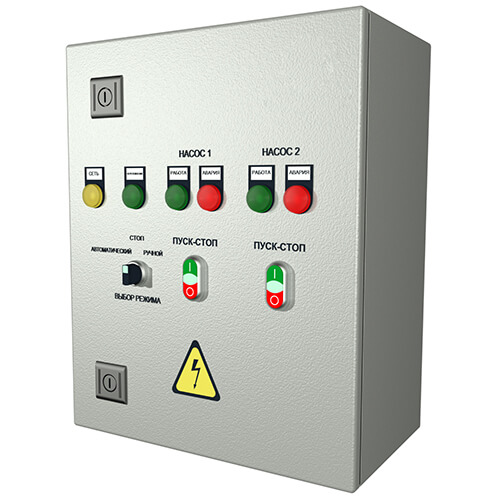
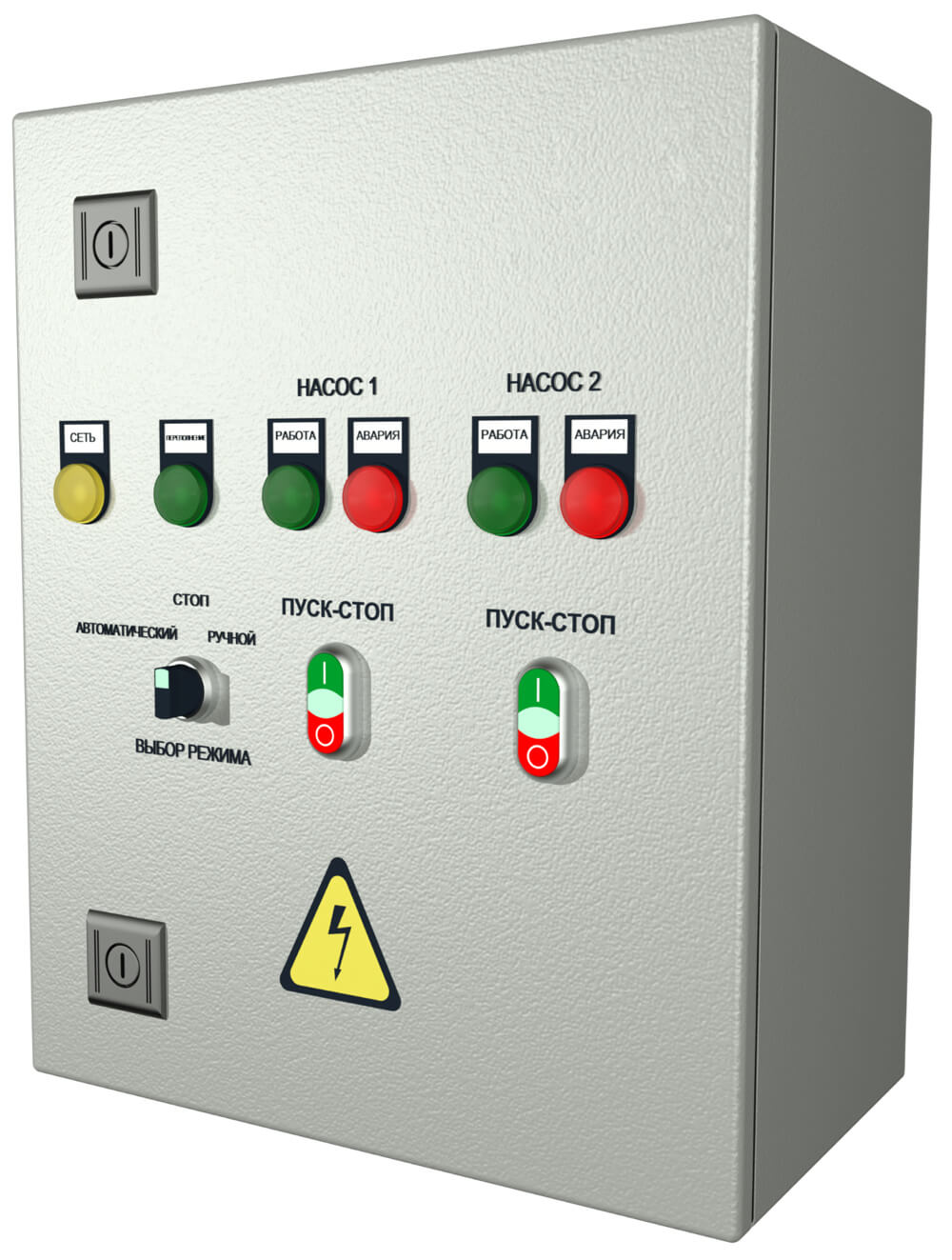
- the "Overflow" indicator lights up On the cabinet door;
- Switching the control system contacts.
Additional Features
Control cabinets designed for operation with two or more pumps feature a flexible configuration feature: the user can independently determine the optimal ratio of operating and standby units in the system.
Those. information
Expanding the Control Cabinet Capabilities: Available Options
The basic cabinet configuration can be supplemented with a number of functional modules, allowing the equipment to be adapted to specific operating requirements.
1. Dispatch Modules
- Motor operation monitoring is implemented via a changeover contact on the terminal block (option "Operation").
- Cabinet operating mode monitoring is transmitted via a changeover contact on the terminal block.
- Combined Level 1 Module Includes a changeover contact on the terminal block and a signal lamp on the cabinet door for visual monitoring.
2. Data Communication Interfaces
- Modbus RTU—communication via the RS-485 interface.
- Modbus TCP/IP—network integration via an Ethernet connection.
3. Additional Equipment for the Front Panel
- Ammeter with Switch—current monitoring for one electric motor.
- Voltmeter with Switch— Voltage monitoring at a single power input.
- Hour meter—records the operating time for a single electric motor.
4. Climate modifications
- UKHL1 version—operation in the temperature range from -60°C to +40°C outdoors.
- UKHL2 version—operation at temperatures from -60°C to +40°C under cover (without direct exposure to precipitation or sunlight) or in an unheated room.
5. External Control Interfaces
- Electrode connection—optional for drainage and sewage pump control cabinets.
6. Protective Modules
- Voltage Monitoring—protects against overvoltage or undervoltage on one input.
- Pt100/Pt1000 Temperature Sensor—monitors the temperature of one electric motor.
- PTC Sensor—thermal protection for one electric motor.
- Humidity Sensor—monitors the humidity level for one electric motor.