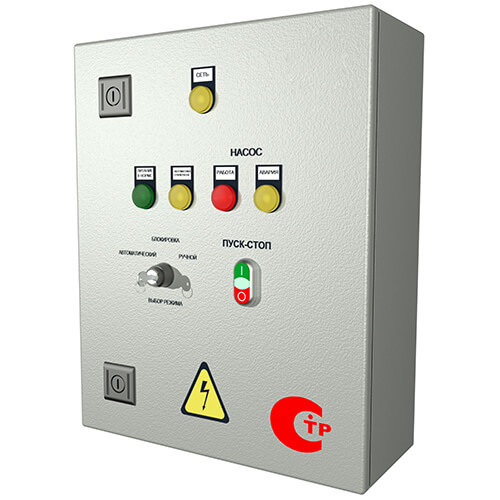




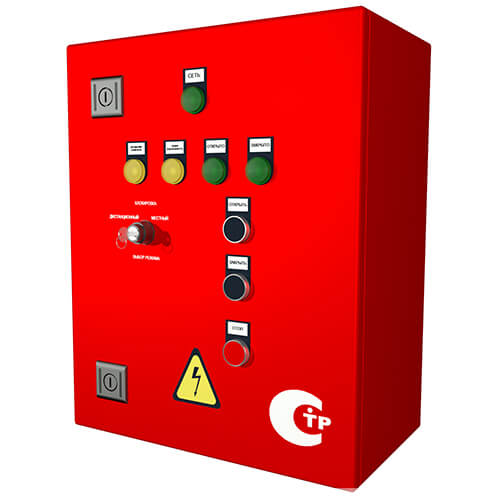
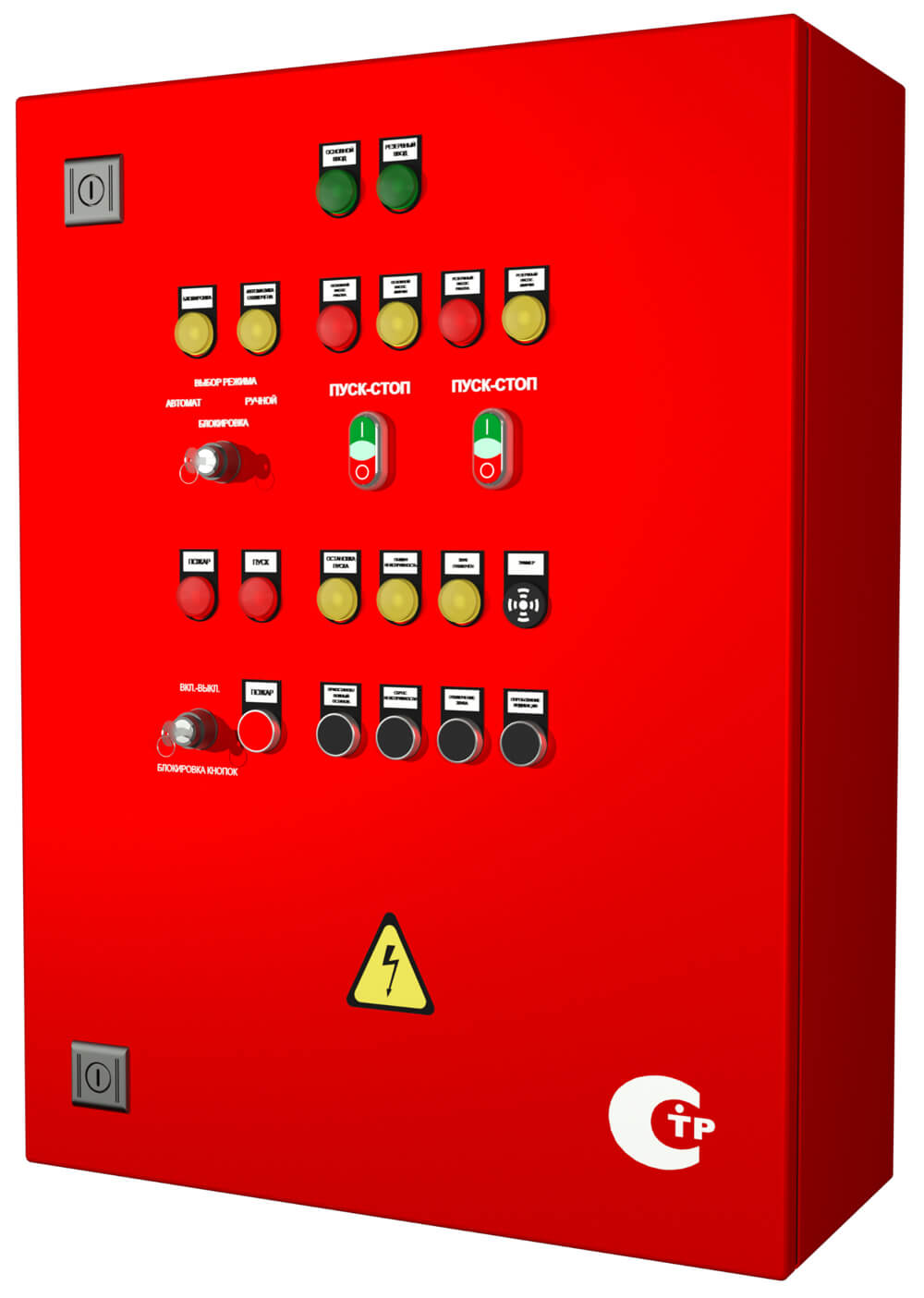
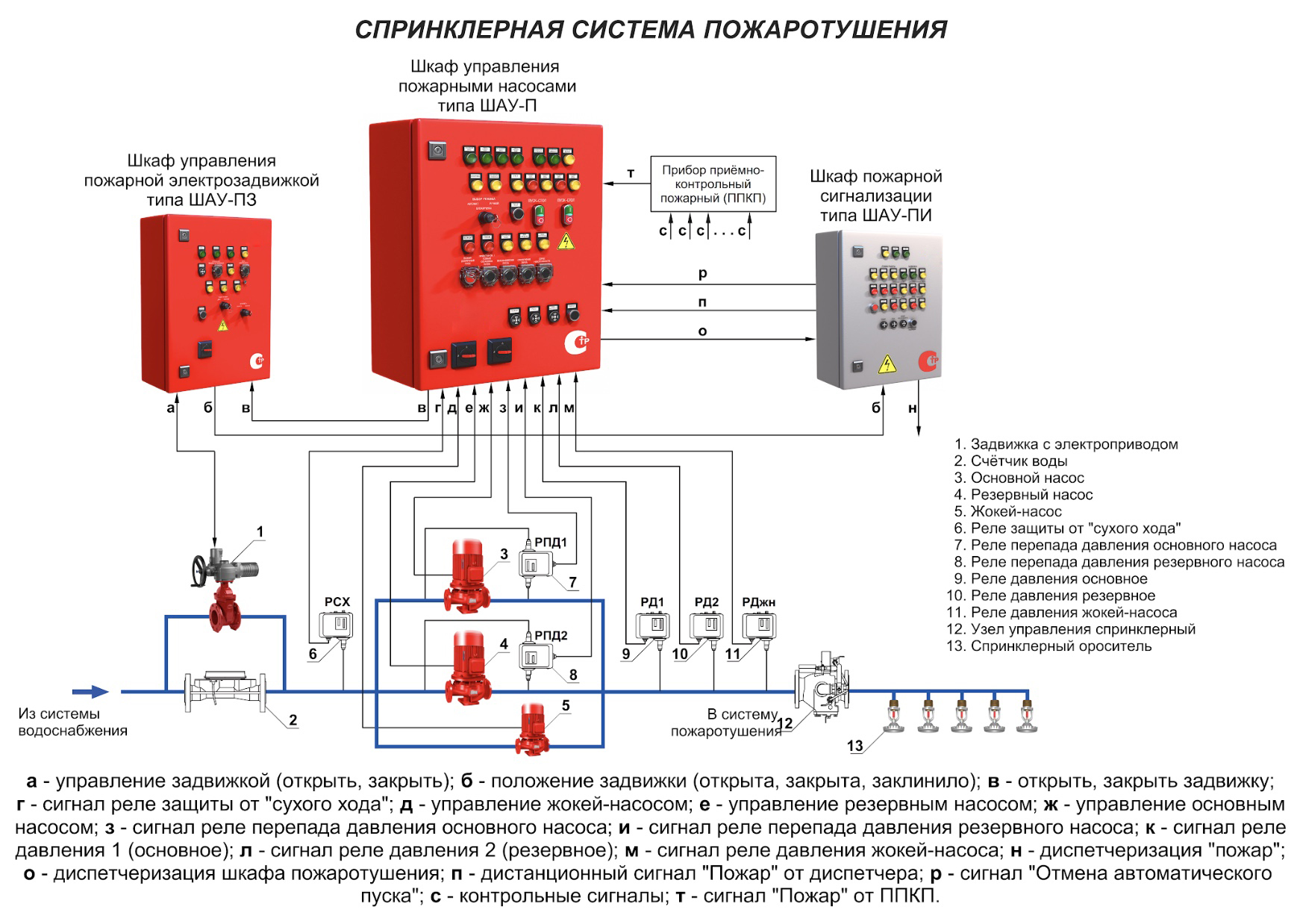
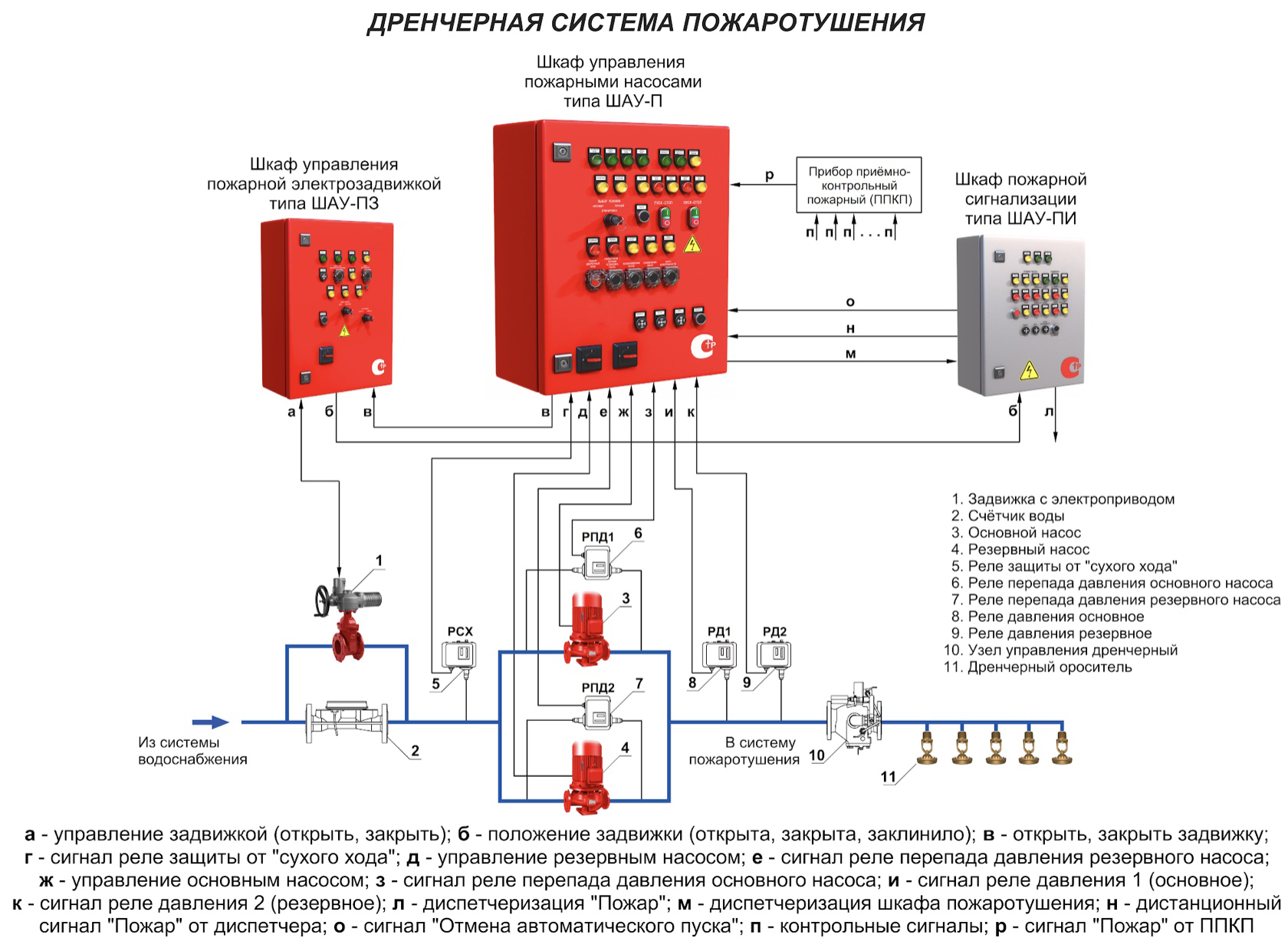


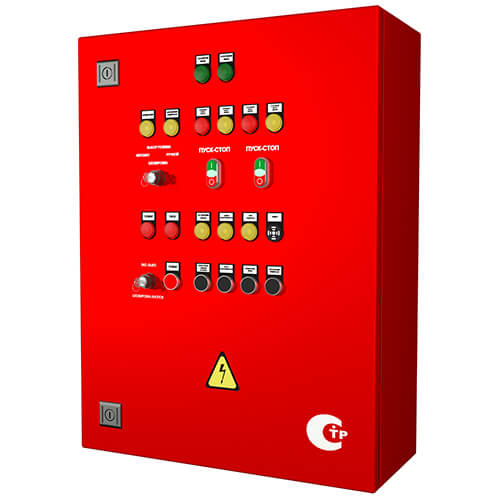
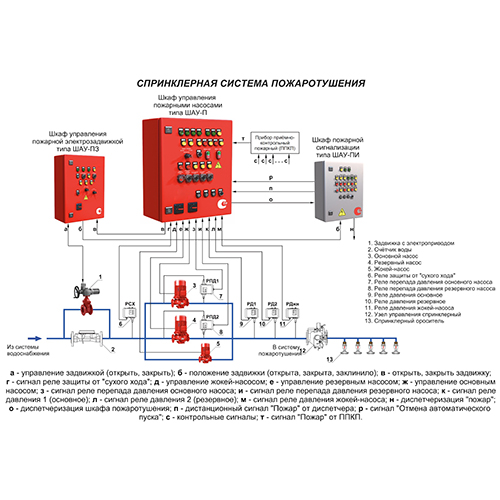
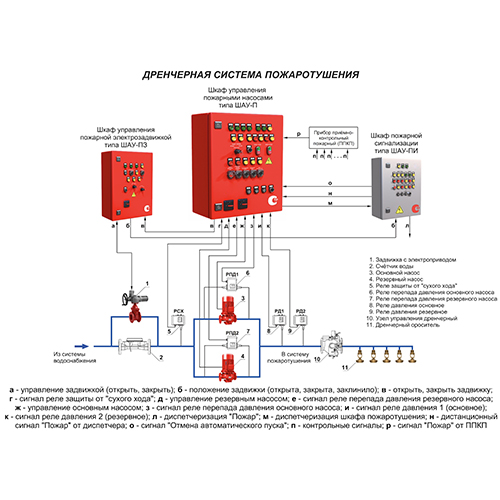
The fire pump control cabinet includes automated damper cabinet control (supplied as a separate component). The appropriate cabinet model can be selected in the corresponding section of the catalog.
Operating Algorithm:
Functionality extensions are available upon request. Increasing the number of controlled valves.
Models with a built-in automatic transfer switch
In the event of a power failure (break, voltage drop, incorrect phasing), the system automatically switches from the main input to the backup input. After the main input parameters are restored, the switchover occurs again.
The marking of such cabinets includes the symbol "B".
Example: SHAU-P-380B-21-010-54.
Models without a built-in automatic transfer switch
Each pump is powered from a separate input (e.g., from two distribution panels). The cabinet also features an automatic transfer switch (ATS) for the control circuit.
Such cabinets are marked with the symbol "B2". Example: SHAU-P-380B2-21-010-54.
Water fire extinguishing systems can be equipped with one or two jockey pumps (one for duty and one for backup). The jockey pump is activated when its pressure switch is triggered.
Operating Features:
Standard parameters of the connected jockey pump:
A cabinet with a jockey pump with a power greater than 11 kW can be manufactured upon request.
The designation "Ж1" is added to the marking, where the number indicates the number of jockey pumps and the current range.
Example: ШАУ-П-380Б-21Ж1-010.005-54.
Frequent direct starting of the electric motor leads to:
Key facts:
Advantages of a soft starter:
Cabinets with a soft starter are marked The symbol "P".
Example: SHAU-P-380B-21-010-54P.
Frequency control is used in complex, branched fire extinguishing systems where it is necessary to:
Operating Features:
The marking includes the "Ч" symbol.
Example: ШАУ-П-380Б-21-025-54Ч.
If the main pump is powered by a frequency converter, and the backup pump is Through a soft starter, the cabinet is marked with the "ChP" symbol.
Example: SHAU-P-380B-21-025-54ChP.
Pump control cabinets comply with the technical regulations on fire safety requirements (Federal Law of July 22, 2008, No. 123-FZ, GOST R 53325-2012). The following functions are implemented:
Pump control cabinets comply with the technical regulations on fire safety requirements (Federal Law of July 22, 2008, No. 123-FZ, GOST R 53325-2012). The following functions are implemented:
Monitoring of circuits and lines:
When a fault is detected:
Protection against unauthorized access to controls.
Alarm signaling All emergency situations are accompanied by sound alerts.
The basic cabinet configuration can be supplemented with a number of functional modules, allowing the equipment to be adapted to specific operating requirements. A list of available options is provided below.
The following communication protocols are available for integrating the cabinet into monitoring and dispatching systems:
An option is available to connect a PTC sensor with full indication and status monitoring for one electric motor (applicable to SHAU-P models).
Depending on operating conditions, you can choose one of the following climate protection options:
The following solutions are offered to expand valve control functionality:
Note: Valve control and connection options may be repeated in the list, as they are intended for independent addition to different system circuits.
We will tell you in detail about our services, types of work and typical projects, calculate the cost and prepare an individual offer!